
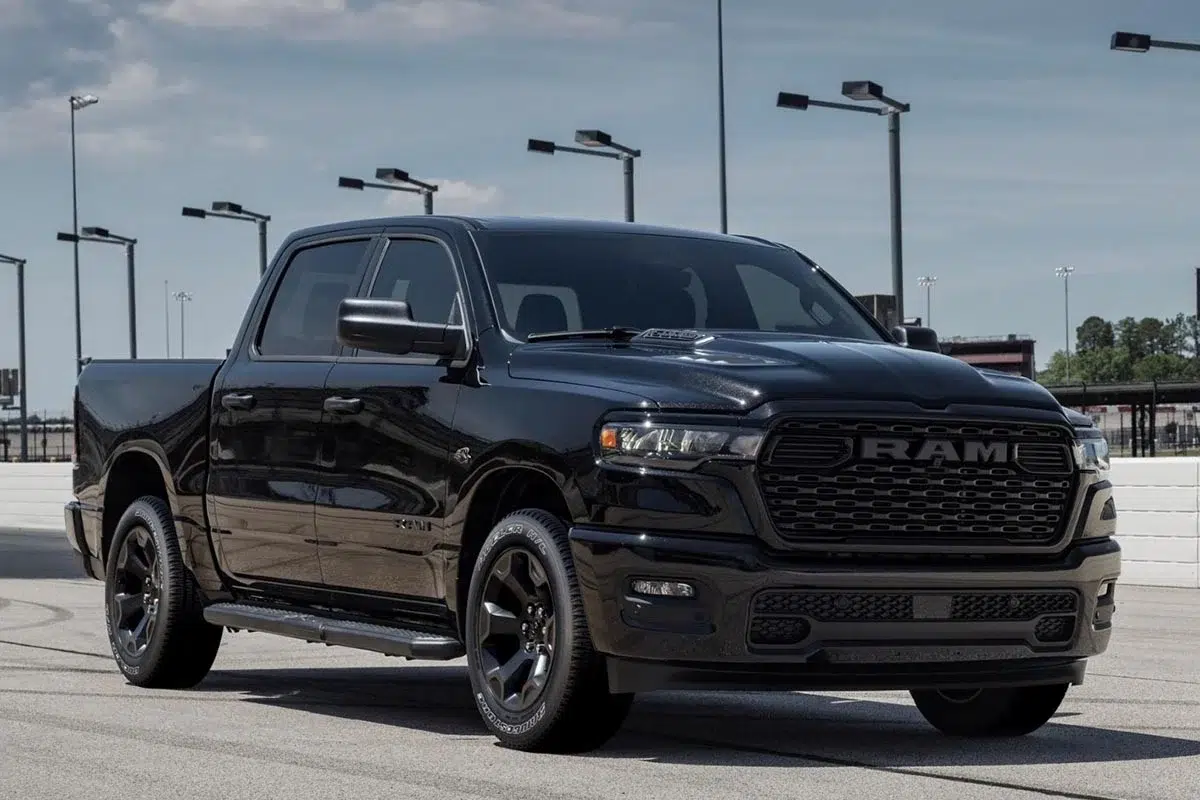
The automotive world is experiencing a fascinating divergence. While European policymakers forge ahead with stringent electric mandates, American consumers are voting with their wallets for traditional powertrains. The revival of Ram’s 5.7-liter V8 HEMI engine stands as a testament to this cultural divide, with demand so overwhelming that production cannot keep pace. This phenomenon raises questions about whether regulatory frameworks should dictate market evolution or respond to genuine consumer preferences.
This transatlantic contrast reveals more than just different approaches to transportation. It exposes fundamental disagreements about how automotive transitions should unfold, who gets to decide the pace of change, and whether passion for mechanical engineering still has a place in an increasingly regulated industry.
When Ram announced the return of its legendary V8 HEMI engine to the 1500 lineup, the response exceeded all projections. More than 10,000 orders flooded in within the first 24 hours, a staggering figure considering Ram sold just over 51,000 pickup trucks during the entire second quarter. This immediate enthusiasm demonstrates that performance specifications alone don’t determine buyer behavior in the American market.
Electric VehicleCheaper than the Ford Ranger and banned in Europe, this off-road pickup wants to shake up the rules in the United StatesThe decision to reintroduce this naturally-aspirated engine came after the disappointing commercial performance of Ram’s electric pickup venture. The new CEO recognized that forcing a transition toward electrification without market readiness would prove counterproductive. Instead of persisting with a strategy that consumers weren’t embracing, the brand chose to listen to actual demand rather than projected trends.
The 5.7-liter V8 delivers 400 horsepower and 556 Nm of torque. These figures are actually lower than the turbocharged Hurricane 3.0 six-cylinder engine, which produces 426 horsepower and 623 Nm. The six-cylinder also offers superior towing capacity up to 5,266 kg. Yet despite these rational advantages, the V8 versions outsell their more efficient counterparts by a two-to-one margin. This preference defies conventional logic about efficiency and capability.
| Engine specification | V8 HEMI 5.7L | Hurricane 3.0L turbo |
|---|---|---|
| Configuration | V8 naturally aspirated | Inline-6 twin-turbo |
| Power output | 400 hp | 426 hp |
| Torque | 556 Nm | 623 Nm |
| Maximum towing capacity | Lower | 5,266 kg |
| Market preference | 2 :1 sales advantage | Lower demand |
The overwhelming preference for the V8 HEMI reveals something profound about automotive culture in America. This isn’t about rejecting technological progress or ignoring environmental concerns. Instead, it represents an attachment to mechanical character and heritage that transcends spreadsheet comparisons. The V8 embodies traditions associated with muscle cars, powerful pickups, and the distinctive soundtrack of eight cylinders.
For many American buyers, particularly outside major metropolitan areas, a vehicle represents more than transportation. It’s an expression of identity and values. The sound, feel, and cultural significance of a large-displacement engine matter as much as objective performance metrics. European manufacturers like Porsche are even attempting to recreate manual transmission sensations in electric vehicles, acknowledging that emotional engagement matters in automotive experiences.
Ram now faces an unexpected logistical challenge. The company lacks sufficient production capacity to meet demand, with executives admitting they would need over 100,000 additional engines to satisfy current orders. This presents an ironic contrast to many European manufacturers struggling to move their electric inventory. While Brussels pushes for accelerated electrification, American consumers are creating supply shortages for traditional powertrains.
Electric VehicleIt looks like an off-roader, but it’s a hybrid SUV with a battery so powerful it can cover 310 miles without ever starting the gasoline engineEuropean policies regarding combustion engine bans remain largely inflexible despite mounting evidence of implementation challenges. The 2035 deadline for eliminating new internal combustion vehicle sales stands firm, driven by ambitious climate targets and a technocratic approach to decarbonization. However, this rigid timeline increasingly conflicts with diverse usage patterns and consumer expectations across member states.
Several practical concerns undermine the European electric mandate’s viability. Affordable electric vehicles often feature limited range, charging infrastructure remains inconsistent across regions, and the cost of new electric vehicles exceeds what many households can afford. Yet regulatory frameworks continue advancing with minimal adaptation to these realities. Meanwhile, innovative approaches like Mercedes’ diesel-hybrid systems demonstrate alternative pathways to reduced emissions.
The contrast between European policy and American market dynamics highlights different philosophical approaches :
- Regulatory mandates versus consumer choice – Europe imposes timeline-driven transitions while American markets respond to demonstrated demand
- Urban-centric planning versus diverse geography – European policies favor dense metropolitan areas while ignoring rural transportation needs
- Emissions-focused metrics versus holistic considerations – European frameworks prioritize tailpipe emissions without adequately addressing production impacts or electricity generation sources
- Technological prescription versus innovation flexibility – European rules specify electric solutions while American approaches allow multiple technologies to compete
This divergence creates competitive asymmetries. Manufacturers like Toyota face pressure to electrify iconic models for European compliance, potentially alienating loyal customers. Others like Mercedes balance electric, hybrid, and traditional offerings to navigate different regional requirements.
The Ram V8 resurgence and European electric mandates represent fundamentally different visions for automotive evolution. Europe’s approach assumes regulatory certainty can drive infrastructure development and consumer adoption simultaneously. The American example suggests that market readiness and cultural acceptance remain essential prerequisites for successful transitions, regardless of policy intentions.
Electric VehicleHongqi SUV with solid-state battery charges in 5 minutesThese competing approaches have implications beyond individual vehicle choices. They affect industrial strategy, employment patterns, supply chain investments, and competitive positioning. While companies like Tesla prepare next-generation electric vehicles, traditional manufacturers must navigate contradictory signals from different markets.
The question isn’t whether electrification will occur, but rather how rapidly and through what mechanisms this transformation should proceed. The extraordinary demand for Ram’s V8 demonstrates that significant market segments aren’t ready to abandon traditional powertrains, regardless of regulatory timelines. This reality challenges the assumption that supply-side mandates alone can reshape consumer preferences and infrastructure simultaneously.
Electric VehicleSubaru Solterra EV : faster than brand’s sports cars despite being SUVAs European automotive manufacturers face declining competitiveness and economic pressures, the American willingness to respond to actual market signals rather than projected scenarios offers an alternative model. Whether Europe will maintain its current trajectory or adapt to emerging contradictions remains uncertain, but the Ram example proves that regulatory ambition and market reality don’t always align on the same timeline.
