
Show table of content Hide table of content
When Japanese automakers venture into electric mobility, expectations run high. The Subaru Solterra EV returns in 2026 with a technical makeover that repositions the brand’s entire philosophy. Initially launched as a sibling to the Toyota bZ4X on the shared e-TNGA architecture, this SUV now delivers acceleration figures that outpace legendary nameplates like WRX STI or BRZ tS. With 338 horsepower and dual-motor symmetrical all-wheel drive, this family hauler sprints from zero to 100 km/h in just 4.3 seconds, making it faster than several sports models bearing the Subaru badge. This performance shift signals more than engineering prowess—it marks a strategic pivot for a manufacturer often perceived as conservative yet reliable.
The new configuration doesn’t sacrifice practicality for speed. Range reaches approximately 460 kilometers on the WLTP cycle thanks to a 74.7 kWh battery pack, while rapid charging capability extends to 150 kW, enabling 10 to 80 percent replenishment in under half an hour. Space remains generous for passengers and cargo, positioning the vehicle squarely in the competitive electric crossover segment alongside Tesla Model Y AWD, Volkswagen ID.4 GTX, and Hyundai Ioniq 5 HTRAC. This balance between dynamic ability and everyday utility defines the 2026 iteration.
Dual-motor architecture delivers sports car acceleration
Electric propulsion fundamentally reshapes performance metrics. The Solterra’s dual-motor configuration places one unit at each axle, generating a combined 338 horsepower (approximately 250 kW) and 438 Nm of torque. Unlike combustion engines that require time to spool turbochargers or climb rev ranges, electric motors deliver instantaneous torque from standstill. This characteristic explains why a family SUV now outperforms purpose-built sports machines from earlier eras.
Electric VehicleBYD extends battery warranty to 250,000 km while Europe hesitatesSubaru’s signature Symmetrical AWD system translates seamlessly into electric format through independent torque vectoring at each wheel. The setup continuously monitors traction conditions and redistributes power with millisecond precision, maintaining stability across varied surfaces from wet asphalt to light off-road trails. This electronic choreography preserves the brand’s heritage of all-weather capability while unlocking acceleration potential previously reserved for specialized performance models.
The e-TNGA platform provides structural rigidity and optimal weight distribution through battery placement beneath the cabin floor. This low center of gravity enhances handling dynamics despite the vehicle’s SUV proportions and elevated ground clearance. Engineers retained suspension tuning that prioritizes comfort over razor-sharp reflexes, acknowledging that most buyers seek versatile transportation rather than track-day credentials. Yet the combination of instant power delivery and chassis balance creates an engaging driving experience during highway merges or winding country roads.
| Technical specification | Solterra EV 2026 |
|---|---|
| Combined power output | 338 hp (250 kW) |
| Torque | 438 Nm |
| 0-100 km/h acceleration | 4.3 seconds |
| Battery capacity (net) | 74.7 kWh |
| WLTP range | 460 km |
| DC fast charging | 150 kW |
Real-world practicality meets zero-emission credentials
Performance figures capture headlines, but daily usability determines ownership satisfaction. The Solterra maintains spacious interior accommodations with ample headroom and legroom across both seating rows. Cargo capacity matches segment expectations, while folding rear seats expand versatility for larger items or recreational equipment. Digital instrumentation provides clear readouts behind the steering wheel, complemented by a centrally mounted touchscreen interface managing navigation, climate control, and vehicle settings.
The 460-kilometer range estimate reflects mixed driving patterns combining urban commutes, highway cruising, and suburban errands. Most owners will recharge once or twice weekly rather than daily, reducing range anxiety that plagued earlier electric vehicles. Compatibility with public charging networks includes rapid DC stations enabling convenient top-ups during longer journeys. For context, manufacturers like BYD extends battery warranty to 250,000 km while Europe hesitates, demonstrating growing confidence in battery longevity across the industry.
Electric VehicleCheaper than the Ford Ranger and banned in Europe, this off-road pickup wants to shake up the rules in the United StatesActive safety systems incorporate the full suite of driver assistance technologies expected in modern vehicles. Adaptive cruise control, lane-keeping assistance, automatic emergency braking, and blind-spot monitoring work together to reduce driver workload and enhance collision avoidance. Subaru’s EyeSight system leverages stereo cameras for improved object recognition compared to single-lens setups. These features prove particularly valuable during highway travel or congested urban environments where split-second reactions prevent accidents.
Zero tailpipe emissions grant access to low-emission zones increasingly common in European and Asian cities. The Crit’Air 0 classification in France exempts the vehicle from circulation restrictions affecting combustion models, while potential purchase incentives reduce acquisition costs in markets promoting electric adoption. Operating expenses drop significantly compared to gasoline equivalents—electricity costs less per kilometer than petrol, and maintenance requirements simplify with fewer moving parts requiring service.
Strategic positioning within evolving market landscape
Subaru’s transformation from niche all-wheel-drive specialist to electric performance contender reflects broader automotive industry shifts. Competitors like Kia EV5 WKNDR concept turns electric SUV into adventure vehicle, showcasing how manufacturers blend utility with lifestyle appeal. The Solterra targets buyers seeking practical transportation without sacrificing driving engagement, attracting former WRX enthusiasts now requiring family space or environmentally conscious consumers desiring more than appliance-like transportation.
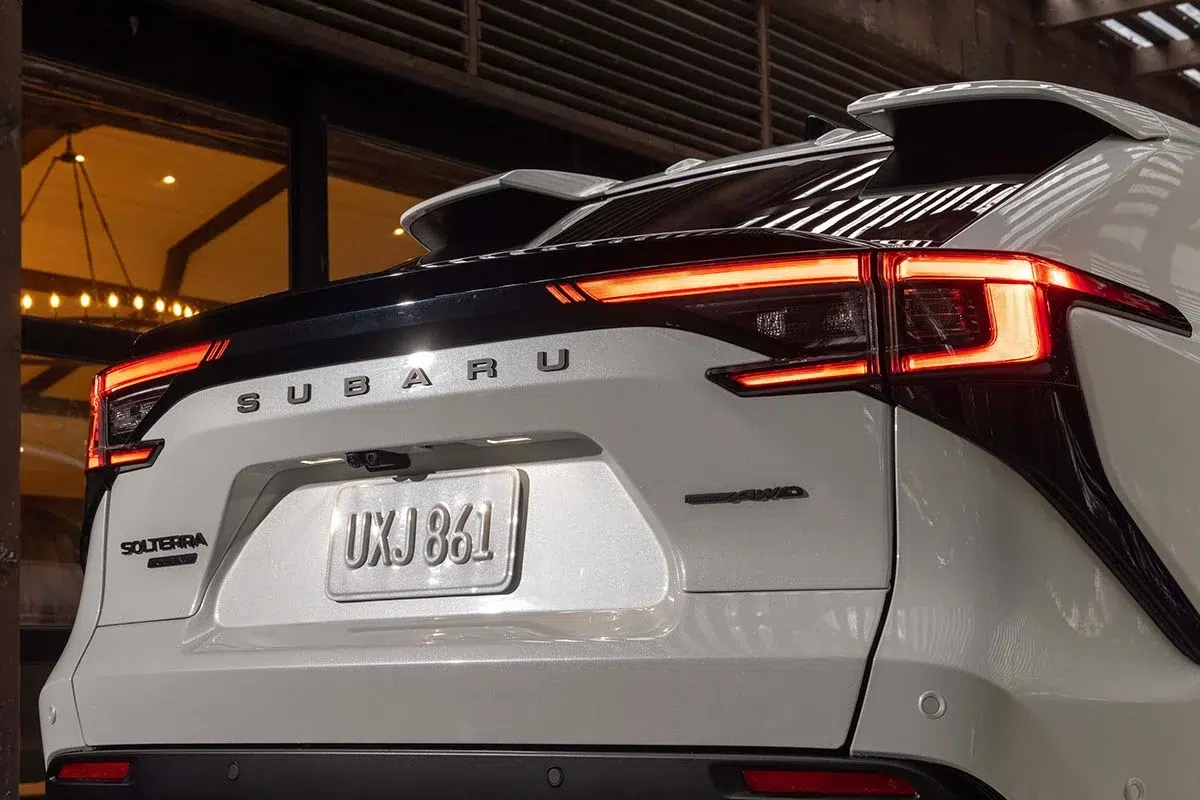
Design language remains understated compared to overtly aggressive styling trends. Taut body lines, functional aerodynamics, and restrained ornamentation signal maturity rather than ostentation. LED lighting signatures provide modern visual identity without excessive flourishes, while protective body cladding hints at light off-road capability. This aesthetic approach appeals to buyers fatigued by overwrought styling exercises or those preferring vehicles that age gracefully rather than date quickly.
Electric VehicleIt looks like an off-roader, but it’s a hybrid SUV with a battery so powerful it can cover 310 miles without ever starting the gasoline engineKey attributes distinguishing the Solterra from competitors include :
- Proven all-wheel-drive expertise translated into electric torque vectoring
- Acceleration performance surpassing previous sports models from same manufacturer
- Spacious interior accommodations maintaining SUV utility
- Conservative exterior design emphasizing longevity over trend-chasing
- Comprehensive safety technology suite as standard equipment
Implications for brand evolution and customer expectations
This enhanced Solterra represents more than a single model refresh—it demonstrates Subaru’s commitment to electric mobility without compromising core brand values. The company built its reputation on reliability, all-weather capability, and understated competence rather than flashy marketing or cutting-edge technology. Translating these attributes into electric format requires balancing innovation with familiarity, ensuring existing customers recognize brand DNA while attracting new buyers.
The performance benchmark set by this SUV creates interesting questions for future model planning. If a family crossover delivers sub-five-second acceleration, what role remains for dedicated sports models ? Traditional performance nameplates may evolve toward track-focused specialization or disappear entirely as mainstream models absorb their capabilities. This democratization of speed mirrors trends across the automotive landscape, where Toyota is preparing an urban electric Land Cruiser — and this shift has off-road purists worried about changing priorities.
Market reception will determine whether Subaru’s electric gambit succeeds beyond early adopters. Pricing, dealer network preparation, charging infrastructure availability, and competitive responses all influence outcomes. The vehicle occupies strategic middle ground between premium European offerings and value-oriented Asian alternatives, potentially attracting buyers seeking quality without luxury-brand premiums. Success here could accelerate electrification across the entire lineup, while disappointing sales might slow the transition.
Electric VehicleHongqi SUV with solid-state battery charges in 5 minutesLong-term ownership costs, resale values, and real-world reliability will shape the Solterra’s legacy more than specification sheets. Subaru’s established reputation for durability provides foundation, yet electric vehicles introduce different maintenance patterns and battery degradation concerns. Extended warranties and battery guarantees address buyer anxieties, while growing service networks reduce range-related apprehension. These practical considerations ultimately outweigh acceleration bragging rights for most purchasers.
