
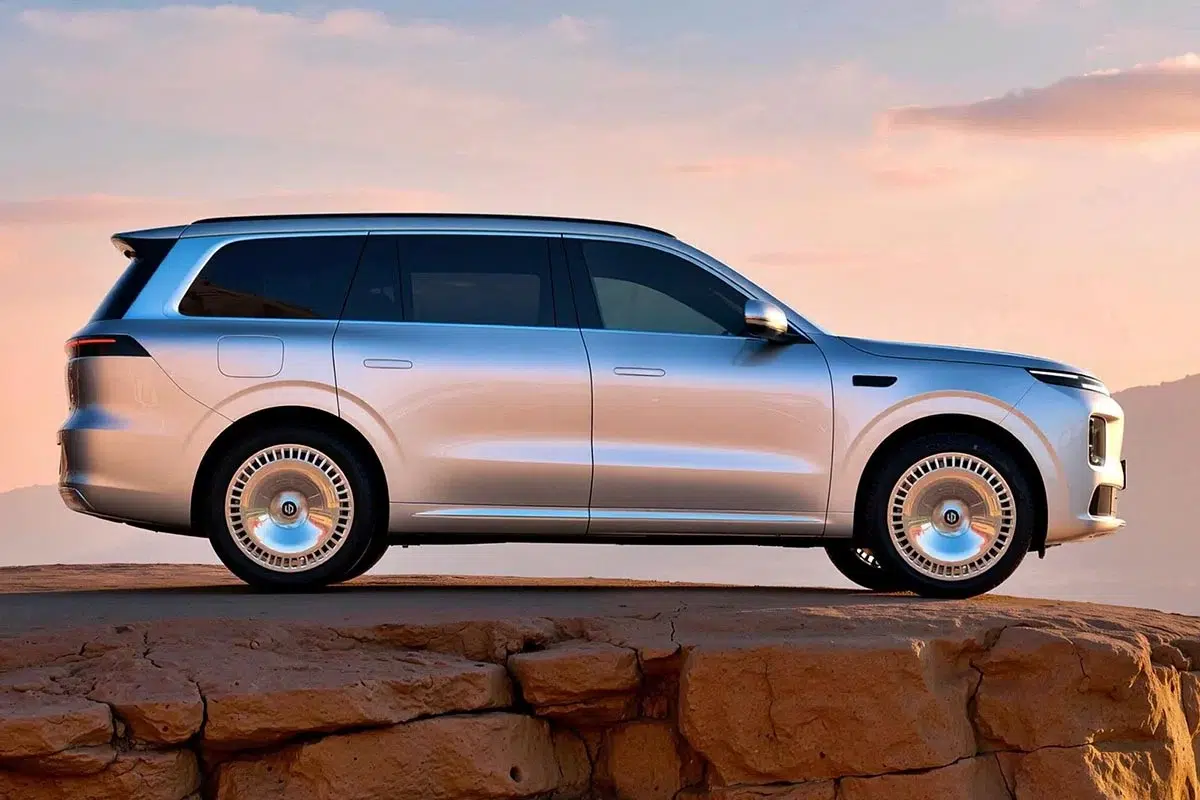
The landscape of large electric SUVs is experiencing a major shift. While European and American brands have dominated this segment for years, Chinese manufacturers are introducing vehicles that combine extended electric range with competitive pricing. The Leapmotor D19 emerges as a technological flagship that challenges conventional expectations for hybrid SUV capabilities. This seven-seater giant features an advanced architecture promising over 500 km of pure electric driving, supplemented by a range extender that pushes total autonomy beyond impressive thresholds. With Stellantis backing its European expansion, this model represents more than just another market entry.
Understanding what sets this vehicle apart requires examining its technical specifications and market positioning. The combination of electric propulsion and a thermal engine used solely for battery charging creates a unique proposition. This approach addresses range anxiety while maintaining the environmental benefits of electric driving for daily use. For consumers evaluating alternatives like BYD Atto 3 DM-i : the family SUV hybrid worth waiting for, the D19 presents a distinct value proposition worth serious consideration.
The Leapmotor D19 establishes itself through exceptional physical dimensions that place it among the largest family vehicles available. Measuring 5.26 meters in length with a wheelbase stretching to 3.15 meters, this SUV competes directly with premium segment references. The extended wheelbase translates into remarkable interior space, accommodating configurations ranging from five to seven passengers depending on buyer preferences. High-end variants feature individual captain’s chairs in the second row, mimicking business-class airline seating with advanced comfort features including ventilation, dedicated climate controls, and integrated multimedia screens.
Electric VehicleSubaru Solterra EV : faster than brand’s sports cars despite being SUVThe exterior design philosophy embraces modern Chinese minimalism with flush door handles, a continuous LED light signature spanning the front fascia, and aerodynamic lines that reduce wind resistance. This massive footprint serves practical purposes beyond visual impact, housing dual battery pack options and ensuring cargo capacity remains generous even in seven-seat configuration. Unlike compact crossovers masquerading as SUVs, this vehicle delivers genuine utility for families requiring both passenger space and luggage volume for extended journeys.
| Dimension | Measurement | Comparison |
|---|---|---|
| Total length | 5.26 meters | Similar to BMW iX and Mercedes EQS SUV |
| Wheelbase | 3.15 meters | Exceeds most European competitors |
| Seating capacity | 5, 6, or 7 seats | Flexible configuration options |
| Battery capacity | 80.3 kWh | Competitive with premium EVs |
Those interested in exploring how Chinese manufacturers are pushing boundaries might also appreciate learning about Leapmotor C10 REEV vs. the competition—this range-extended Chinese model hides advantages no one saw coming, which shares similar technological philosophy.
The core innovation distinguishing this vehicle lies in its EREV architecture (Extended Range Electric Vehicle). Unlike conventional hybrids where the combustion engine drives the wheels, this system operates exclusively in electric mode. A 400 kW electric motor (approximately 536 horsepower) propels the vehicle while an 80.3 kWh battery provides the energy reserve. The thermal engine functions solely as an onboard generator, recharging batteries during travel without mechanical connection to the drivetrain.
This configuration delivers up to 500 km of pure electric range under real-world conditions, followed by an additional 800 km enabled through the range extender. The combined autonomy exceeds 1,300 km according to Chinese CLTC testing protocols. Even accounting for the typical 20-25% variance when converted to European WLTP standards, this performance surpasses most battery-electric vehicles currently available. For perspective, premium European EVs typically achieve 600-700 km maximum range.
Key advantages of this hybrid approach include :
- Daily electric operation eliminates fuel consumption for typical commuting patterns
- Extended journey capability without charging infrastructure dependence
- Reduced range anxiety compared to pure battery-electric vehicles
- Flexibility for drivers lacking home charging facilities
- Environmental benefits through predominantly electric operation
The vehicle supports 800-volt rapid charging (1000V in pure EV variants), enabling battery replenishment from 30% to 80% capacity within 15-20 minutes at compatible stations. This dual-approach philosophy addresses practical concerns while maintaining commitment to electrification. Manufacturers like Mercedes with their diesel-hybrid technology and Lexus with their proven hybrid systems demonstrate alternative paths, yet the EREV concept offers distinct advantages for long-distance family travel.
China598 Hp Changan NEVO E07 : SUV, pickup and family car in oneThe interior technological suite positions this SUV as a mobile digital environment. Twin Qualcomm Snapdragon 8797 processors power both the user interface and advanced driver assistance systems. The driver benefits from a digital instrument cluster, a large floating central touchscreen, and in premium versions, a 60-inch augmented reality head-up display projecting information across the windshield. This creates an immersive driving experience where critical data appears within the driver’s natural sight line without requiring attention shifts.
Roof-mounted LiDAR sensors enable semi-autonomous driving capabilities classified as Level 2+, with announced evolution toward Level 3 functionality. The cabin materials reflect premium segment standards with ventilated seating, quad-zone climate control, ambient lighting systems, and on certain markets, integrated oxygen generators for air quality management. This represents a comprehensive approach to passenger comfort during extended journeys. For those seeking versatile platforms, vehicles like the Changan NEVO E07 and concepts such as the Kia EV5 WKNDR demonstrate how manufacturers are reimagining vehicle functionality.
Stellantis formalized a strategic partnership with Leapmotor in 2023, securing exclusive European distribution rights. This collaboration positions the D19 for French market entry by 2026, leveraging the established Peugeot, Fiat, and Citroën dealer networks. The Chinese domestic pricing stands at approximately 300,000 yuan, equivalent to roughly 39,000 euros before taxes. Even factoring import duties, VAT, and European regulatory compliance adaptations, the final retail price would likely remain below 55,000 euros.
ChinaHongqi SUV with solid-state battery charges in 5 minutesThis represents a 20,000 to 30,000 euro advantage compared to equivalent European competitors. Such aggressive pricing could appeal to consumers willing to trust emerging brands, provided after-sales networks and warranty coverage prove robust. If Stellantis successfully manages these service aspects, the D19 could become the most affordable large electric SUV available in the French market. This pricing strategy challenges established manufacturers to reconsider their premium positioning or risk losing market share to Chinese competitors offering comparable specifications at substantially lower costs. The vehicle’s combination of extended range, advanced technology, and competitive pricing creates a compelling proposition for families prioritizing space, versatility, and operational flexibility over traditional brand prestige.
