
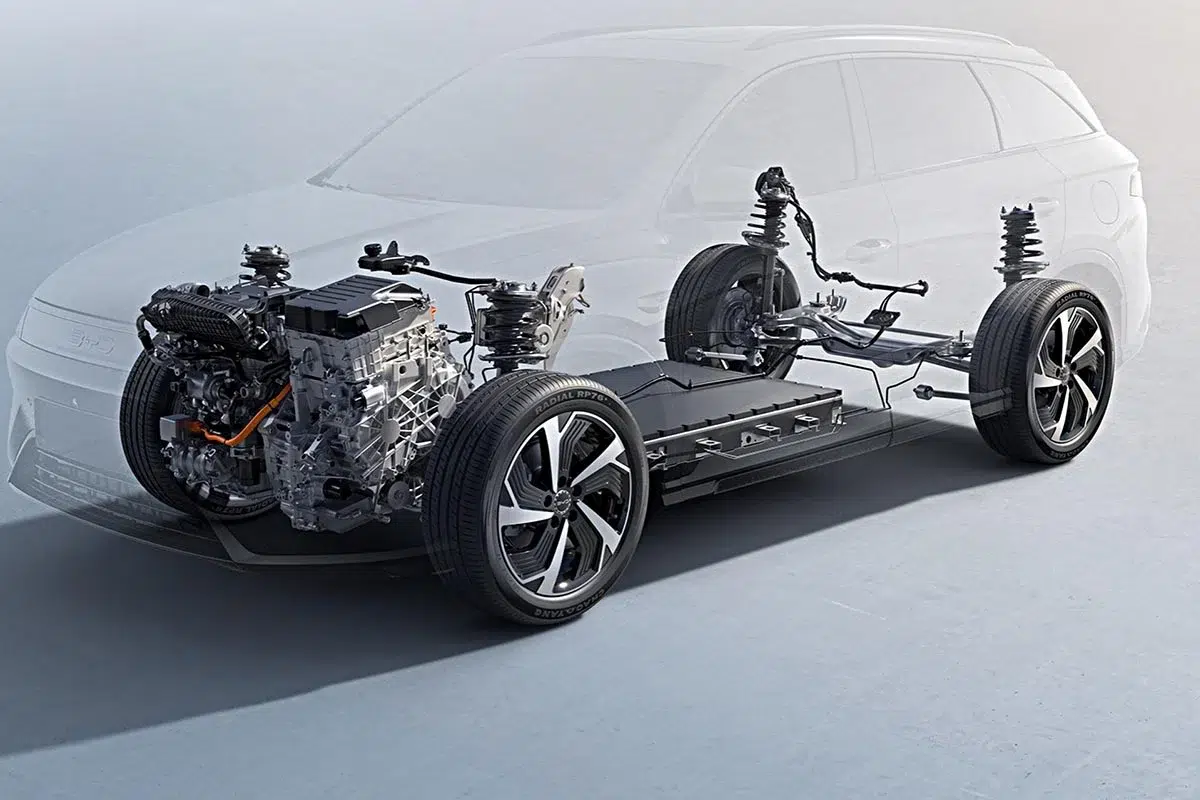
While European automakers continue debating their electric strategy amid industrial and economic pressures questioning the 2035 combustion engine phase-out, Chinese manufacturer BYD has just made a decisive move that reshapes industry standards. The company recently announced an unprecedented extension of its battery warranty to 250,000 kilometers or eight years, applicable across its entire electrified vehicle range. This bold decision applies not only to new purchases but also retroactively to all vehicles already delivered to European customers, without requiring any action from owners.
This strategic announcement arrives at a critical moment when consumer confidence in electric vehicles remains fragile, primarily due to concerns about battery degradation and replacement costs. By offering such an extensive warranty, BYD addresses these apprehensions head-on while positioning itself as a technology leader rather than merely a price competitor. The psychological impact of this move extends beyond mere numbers, establishing new benchmark standards that competitors will struggle to match.
The warranty extension encompasses BYD’s proprietary Blade Battery technology, now standard across all the manufacturer’s electrified models. What makes this coverage truly exceptional is its comprehensive nature : beyond protecting against manufacturing defects, BYD commits to maintaining at least 70% of usable capacity throughout the warranty period. For a vehicle offering 500 kilometers of range when new, this means guaranteeing a minimum of 350 kilometers at warranty expiration. This commitment provides tangible long-term investment security for buyers worried about depreciation and performance loss.
BYDBYD Atto 3 DM-i : the family SUV hybrid worth waiting forThe automatic retroactive application distinguishes this warranty from typical industry practices. Existing BYD owners receive this extended protection immediately, without paperwork, additional fees, or complex procedures. This customer-centric approach reinforces brand loyalty while demonstrating confidence in product durability. The standard vehicle warranty remains set at six years or 150,000 kilometers, already exceeding sector averages. Only fleet sales and rental companies face specific conditions, while private buyers benefit from simplified after-sales procedures and unprecedented peace of mind.
| Manufacturer | Battery warranty duration | Mileage coverage | Capacity guarantee |
|---|---|---|---|
| BYD | 8 years | 250,000 km | 70% |
| Tesla | 8 years | 160,000-192,000 km | 70% |
| European brands (average) | 8 years | 160,000 km | 70% |
| Hyundai/Kia | 8 years | 160,000 km | 70% |
BYD’s confidence stems from its breakthrough Blade Battery architecture, which represents a fundamental departure from conventional lithium-ion designs. Unlike traditional NCM or NCA chemistries, this battery utilizes lithium iron phosphate (LFP) chemistry, renowned for thermal stability, extended lifespan, and reduced manufacturing costs. However, BYD’s innovation extends beyond chemistry to structural design. Rather than grouping cells into modules, the system integrates cells directly as longitudinal blades, creating a continuous array that maximizes space efficiency.
This unique configuration delivers multiple advantages. The improved cooling distribution prevents hotspots that accelerate degradation, while the structural rigidity enhances crash protection. During industry-standard nail penetration tests designed to evaluate battery safety, the Blade Battery demonstrated remarkable resilience : no temperature spike, no combustion, and complete structural integrity. This passive safety performance addresses lingering consumer fears about battery fires, a concern that continues affecting electric vehicle adoption rates across European markets.
Regarding durability metrics, BYD claims the Blade Battery can withstand up to 3,000 charge-discharge cycles before significant capacity loss occurs. In real-world usage patterns, this translates to operational lifespans exceeding 500,000 kilometers without replacement. The technology’s longevity fundamentally changes the economic equation for electric vehicles, potentially eliminating battery replacement as a consideration during typical ownership periods. Key technical advantages include :
- Enhanced thermal management through direct cell-to-pack architecture reducing heat concentration
- Improved volumetric efficiency allowing greater energy density within equivalent spaces
- Superior structural integrity contributing to overall vehicle safety ratings
- Extended cycle life reducing total ownership costs and environmental impact
- Reduced fire risk through inherently stable LFP chemistry combined with innovative design
The competitive gap between Chinese and European manufacturers continues widening. While established brands maintain battery warranties typically limited to 160,000 kilometers over eight years, BYD simultaneously extends coverage and delivers technically superior products. This differential could prove decisive in the used vehicle market, where battery longevity concerns currently drive significant depreciation. Buyers evaluating second-hand electric vehicles increasingly prioritize remaining warranty coverage, making BYD’s extended protection a substantial value proposition.
BYDBYD extends battery warranty to 250,000 km while Europe hesitatesTraditional automakers now face mounting pressure to respond. Simple warranty matching won’t suffice without underlying technological improvements to justify such commitments. With BYD planning locally assembled models and aggressively priced offerings entering European markets, the commercial leverage of superior warranty terms could significantly impact market share. Manufacturers exploring alternative powertrain solutions like advanced hybrid systems must now also address the battery durability narrative that BYD has claimed as its competitive advantage.
This initiative reflects a broader paradigm shift in electric vehicle competition. The battleground has evolved beyond charging speeds and maximum range toward long-term reliability assurance and customer confidence. BYD’s warranty extension represents more than marketing; it signals manufacturing maturity and technology refinement that European brands cannot ignore. The psychological impact on consumers weighing electric vehicle purchases could prove substantial, particularly among those prioritizing total ownership costs over initial purchase price. As electric vehicle adoption accelerates globally, warranty comprehensiveness may become as critical a differentiator as performance specifications or brand heritage.
