
Show table of content Hide table of content
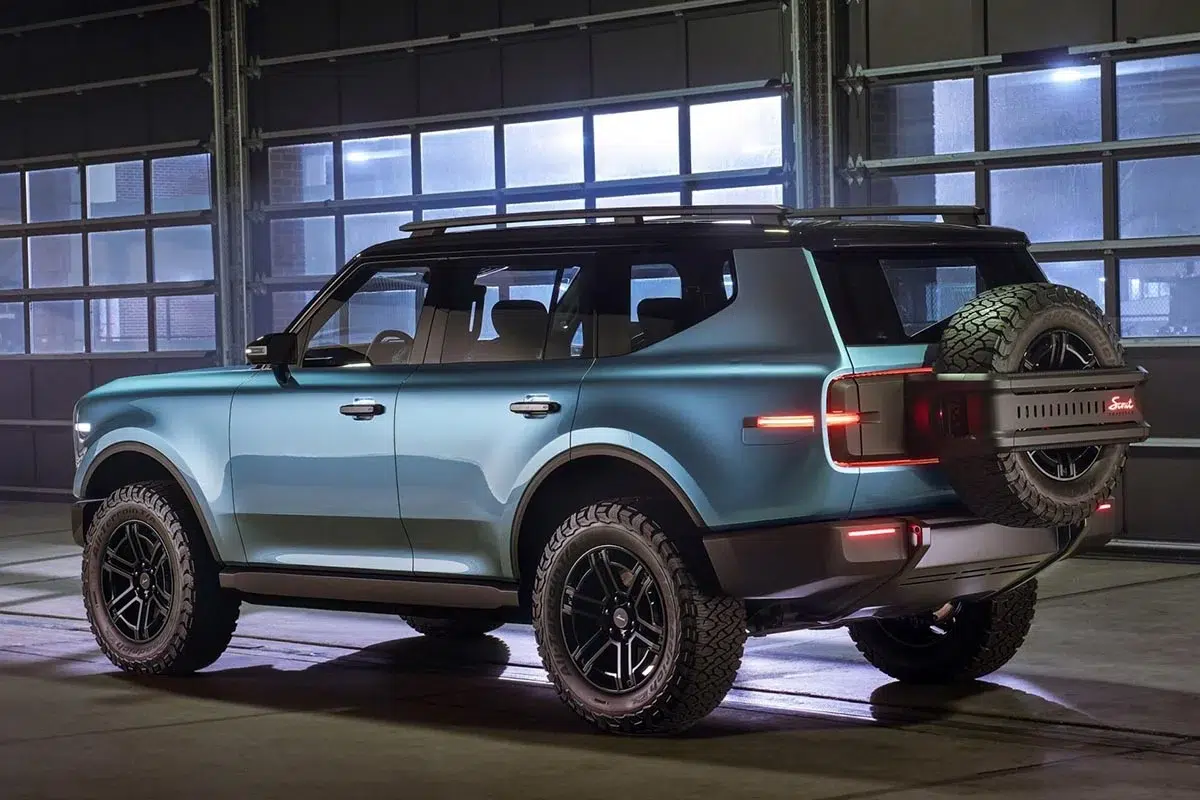
The premium automotive segment witnesses an unprecedented shift as Audi ventures into uncharted territory. The German manufacturer announces its intention to develop a genuine off-road vehicle based on a separated chassis architecture, breaking away from its traditional SUV philosophy. This ambitious project relies on Scout Motors’ engineering expertise, an American brand revived by Volkswagen Group specifically to conquer the North American market with electric rugged vehicles.
Unlike conventional crossovers wearing the four-ring emblem, this forthcoming model adopts a body-on-frame construction method. This technical choice positions the vehicle alongside legendary off-roaders such as the Land Rover Defender, Mercedes G-Class, and Toyota Land Cruiser. The partnership between Audi and Scout enables cost optimization while ensuring local production in South Carolina, strategically avoiding import tariffs and responding to American market expectations.
This strategic alliance represents more than a simple badge-engineering exercise. Audi will contribute its premium design language, advanced technologies, and refined interior craftsmanship, while Scout provides the robust platform and manufacturing infrastructure. The Blythewood production facility, where Volkswagen invested substantial resources, will handle assembly operations exclusively for the North American market initially.
Scout’s platform technology at the core of Audi’s off-road ambitions
The engineering foundation of this German luxury 4×4 originates from Scout’s dedicated architecture, designed specifically for demanding off-road applications. This platform employs a ladder-frame chassis configuration, offering superior structural rigidity compared to unibody constructions commonly found in urban SUVs. The separated chassis allows greater suspension articulation, essential for maintaining wheel contact on uneven terrain and rocky trails.
Electric VehicleIt looks like an off-roader, but it’s a hybrid SUV with a battery so powerful it can cover 310 miles without ever starting the gasoline engineTechnical specifications emerging from Scout prototypes suggest impressive capabilities. The base platform accommodates dual-motor configurations, with one electric unit powering each axle, delivering intelligent all-wheel-drive functionality. Battery capacity targets exceed 100 kWh, promising over 300 miles of range under real-world conditions. Towing capacity reaches approximately 2.7 tons, matching requirements for boat trailers, camping equipment, or construction materials.
The modular nature of Scout’s architecture permits multiple powertrain options. Beyond pure battery-electric variants, Audi explores range-extender technology, integrating a compact combustion engine functioning solely as an onboard generator. This configuration addresses range anxiety concerns among adventure enthusiasts planning extended expeditions far from charging infrastructure. Such flexibility proves particularly relevant as Europe reconsiders its combustion engine phase-out timeline, potentially influencing global electrification strategies.
| Technical Feature | Specification |
|---|---|
| Chassis Type | Body-on-frame (ladder construction) |
| Powertrain | Dual electric motors + optional range extender |
| Expected Range | 300+ miles (480+ km) |
| Towing Capacity | Up to 2.7 tons |
| Production Location | Blythewood, South Carolina |
Ground clearance exceeds eleven inches in standard configuration, with potential for adjustable air suspension systems that raise the vehicle further when traversing obstacles. Similar technologies found in Mercedes G-Wagon suspension upgrades demonstrate the advantages of adaptive ride height systems in maintaining both on-road comfort and off-road capability.
Strategic positioning against established luxury off-roaders
Audi’s entrance into the authentic 4×4 segment challenges well-established competitors who dominated this niche for decades. The Mercedes-Benz G-Class commands premium pricing often exceeding $150,000, while Land Rover Defender models range between $60,000 and $120,000 depending on specifications. Both vehicles cultivate passionate followings but face criticism regarding fuel consumption, outdated technology interfaces, or compromised daily usability.
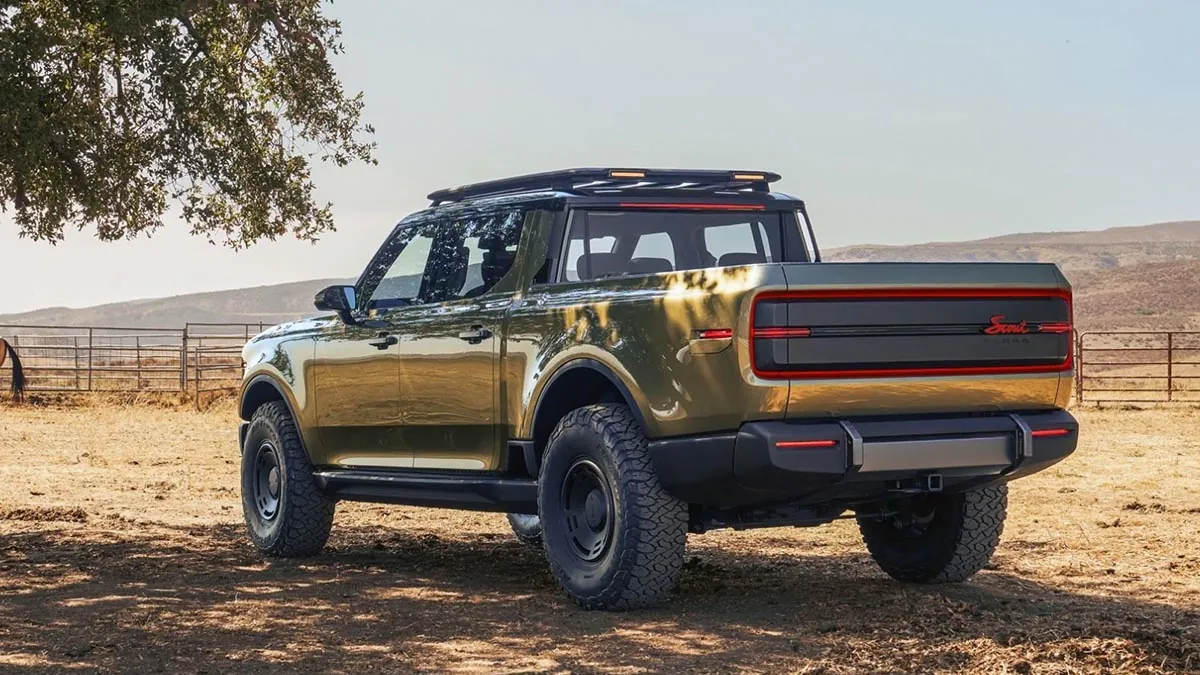
The German manufacturer identifies several competitive advantages for its forthcoming model :
- Electrified powertrains delivering instant torque for rock crawling without traditional low-range transfer cases
- Modern digital interfaces integrating Audi’s latest MMI infotainment systems
- Premium interior materials maintaining luxury standards during rugged outdoor adventures
- Competitive pricing positioned below G-Class while exceeding mainstream offerings
- American production ensuring rapid delivery and local service support
This positioning strategy also counters emerging electric competitors. Rivian’s R1S and R1T established strong footholds among adventure-oriented buyers, while Tesla’s Cybertruck generates polarizing reactions with its unconventional design. Audi leverages its heritage of technological innovation combined with Scout’s authentic off-road DNA to attract customers seeking proven luxury without experimental aesthetics.
Interestingly, while Toyota prepares an urban-focused electric Land Cruiser, Audi pursues the opposite direction, emphasizing genuine off-road capability over city-friendly dimensions. This strategic divergence highlights contrasting interpretations of future 4×4 evolution, with Audi betting on authentic wilderness capability rather than urban maneuverability.
Production timeline and market deployment strategy
Manufacturing operations commence at the dedicated Blythewood facility during late 2026, with initial customer deliveries anticipated throughout 2027. Volkswagen’s substantial investment in this South Carolina plant underscores commitment to American production, avoiding tariff complications while generating local employment opportunities. The factory employs advanced manufacturing techniques, including automated body welding and precision battery pack assembly.
Initial production volumes remain modest, reflecting Audi’s approach of establishing brand credibility before pursuing mass-market penetration. The manufacturer targets approximately 15,000 to 20,000 units annually, focusing on United States and Canadian markets where large vehicles dominate sales charts. This conservative volume strategy prevents inventory accumulation while building desirability through controlled availability.
European distribution remains uncertain, dependent upon North American reception and regulatory considerations. German customers traditionally appreciate robust off-road vehicles, evidenced by strong G-Class sales in Bavaria and Baden-Württemberg. Scandinavian markets also demonstrate appetite for capable all-terrain vehicles, given challenging winter conditions and outdoor lifestyle preferences. However, European launch would require additional homologation procedures and adaptation to local charging infrastructure standards.
Electric VehicleHongqi SUV with solid-state battery charges in 5 minutesThe automotive industry witnesses rapid evolution, as demonstrated by Tesla’s ambitious 2026 product launches and Xpeng’s revolutionary flying car developments. Audi’s Scout-based 4×4 represents measured innovation, combining proven mechanical principles with modern electrification rather than pursuing radical transformation.
Design philosophy blending heritage and modernity
Visual identity draws inspiration from classic utility vehicles while incorporating contemporary Audi design language. The boxy silhouette maximizes interior volume and projecting rugged capability, contrasting sharply with the flowing curves characterizing mainstream crossovers like Toyota’s C-HR hybrid. Upright greenhouse angles improve visibility during technical maneuvers, while flat body panels simplify repairs following trail damage.
Front fascia features Audi’s signature lighting technology, with LED or potentially laser headlights providing exceptional illumination during night driving. The closed grille design, typical of electric vehicles, houses sensors for advanced driver assistance systems while maintaining cooling efficiency for power electronics. Skid plates protect vulnerable underbody components, finished in contrasting colors highlighting off-road intentions.
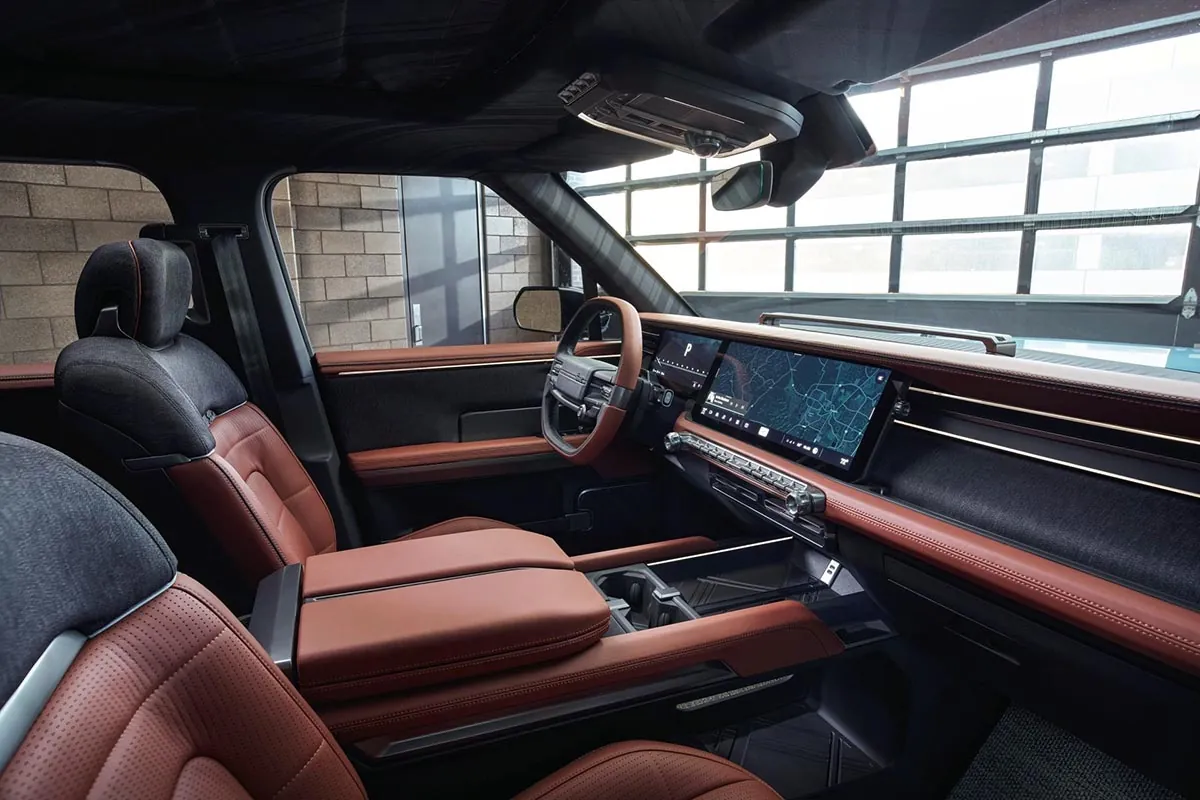
Interior design balances durability requirements with luxury expectations. Water-resistant upholstery, rubberized floor mats, and easily cleanable surfaces accommodate muddy boots and sandy equipment. Simultaneously, the cabin incorporates premium touches : ambient lighting, panoramic glass roofs, and high-resolution digital displays. This duality mirrors successful approaches seen in Mercedes air suspension upgrades, where comfort meets capability through thoughtful engineering.
Electric VehicleSubaru Solterra EV : faster than brand’s sports cars despite being SUVStorage solutions throughout the vehicle reflect practical considerations. Lockable compartments secure valuables during outdoor activities, while clever packaging maximizes cargo space despite battery placement constraints. The rear loading area accommodates camping gear, sports equipment, or construction materials, reinforced with tie-down points and integrated power outlets supporting 120V and 240V devices.
